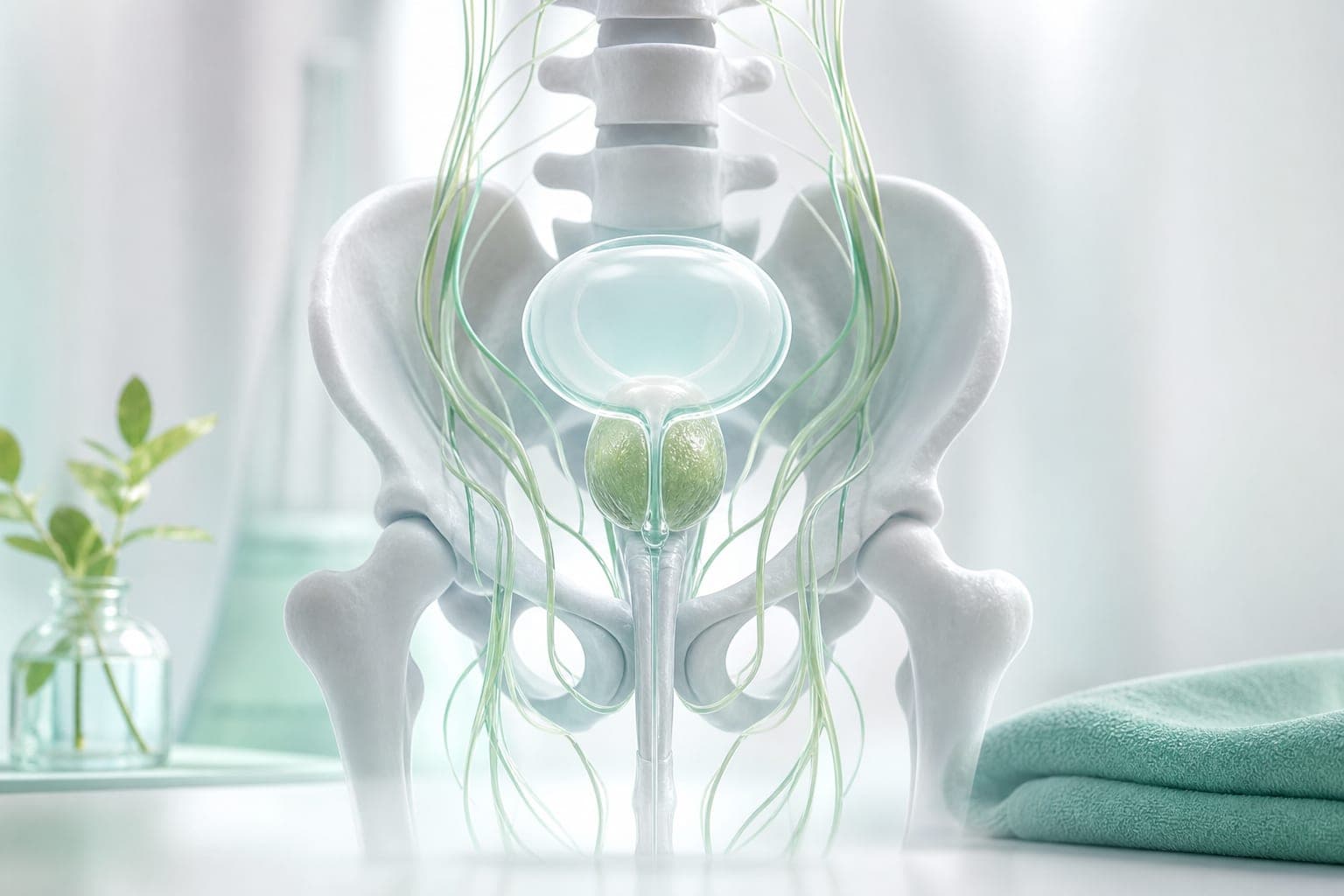
Why frequency is so stubborn
Frequency, urgency and nocturia in CP/CPPS often involve heightened bladder and urethral sensitivity, a sense of incomplete voiding from pelvic floor tension, and ongoing irritation from inflammatory or neural factors. These mechanisms usually coexist and do not improve in step with pain, so “the pain is better but nights are still bad” is common.
The chain effect of nocturia
Repeated night waking fragments sleep, causing daytime fatigue, poor concentration and irritability; anxiety and light sleep in turn make you more alert to bladder cues, creating a nocturia–insomnia–hypervigilance loop. A 1–2 week voiding diary (times, volumes, fluids and alcohol, sleep) helps your clinician considerably.
Other causes that must be ruled out first
Nocturia and frequency have many causes beyond prostatitis, especially in middle-aged and older men:
- Benign prostatic hyperplasia (BPH) or bladder outlet obstruction
- Overactive bladder, urinary infection, stones, interstitial cystitis
- Diabetes, heart failure, diuretics, caffeine and alcohol intake
- Sleep apnea and other sleep disorders
When it is an emergency
Inability to urinate (retention), fever and chills with voiding difficulty, or visible blood in the urine require immediate local emergency or urological care and should not wait for any outpatient-style evaluation.
THREM and urinary symptoms
In the published 20-person study, IPSS scores were lower at 6-month follow-up than at baseline. Because the study excluded men with BPH, its results cannot be applied to voiding problems driven mainly by prostate enlargement. This site does not use individual stories to demonstrate effectiveness; suitability for evaluation is decided by a clinician after full differential diagnosis.