What THREM is
THREM (Traditional Chinese herbal medicine Retention Enema combined with perineal Massage) is a combination intervention developed in practice by Dr. Zhiyong Wu’s team and described in a preliminary study published in 2024. It is intended for adult men with CP/CPPS who remain symptomatic after oral medication and other routine care. It is an additional option to learn about — not a replacement for urological assessment or standard care.
Why a retention enema
Oral drugs are absorbed through the gut and altered by first-pass liver metabolism; how much reaches deep pelvic organs is hard to measure. The lower rectum lies next to the prostate, so rectal delivery increases local contact in the pelvic region. This is a change in delivery site and contact — not proof that medicine “reaches the lesion directly” or clears all inflammation or pathogens from the ducts. See our article “Why retention enema may be used in CP/CPPS care” for details.
Herbal formula (traditional descriptions)
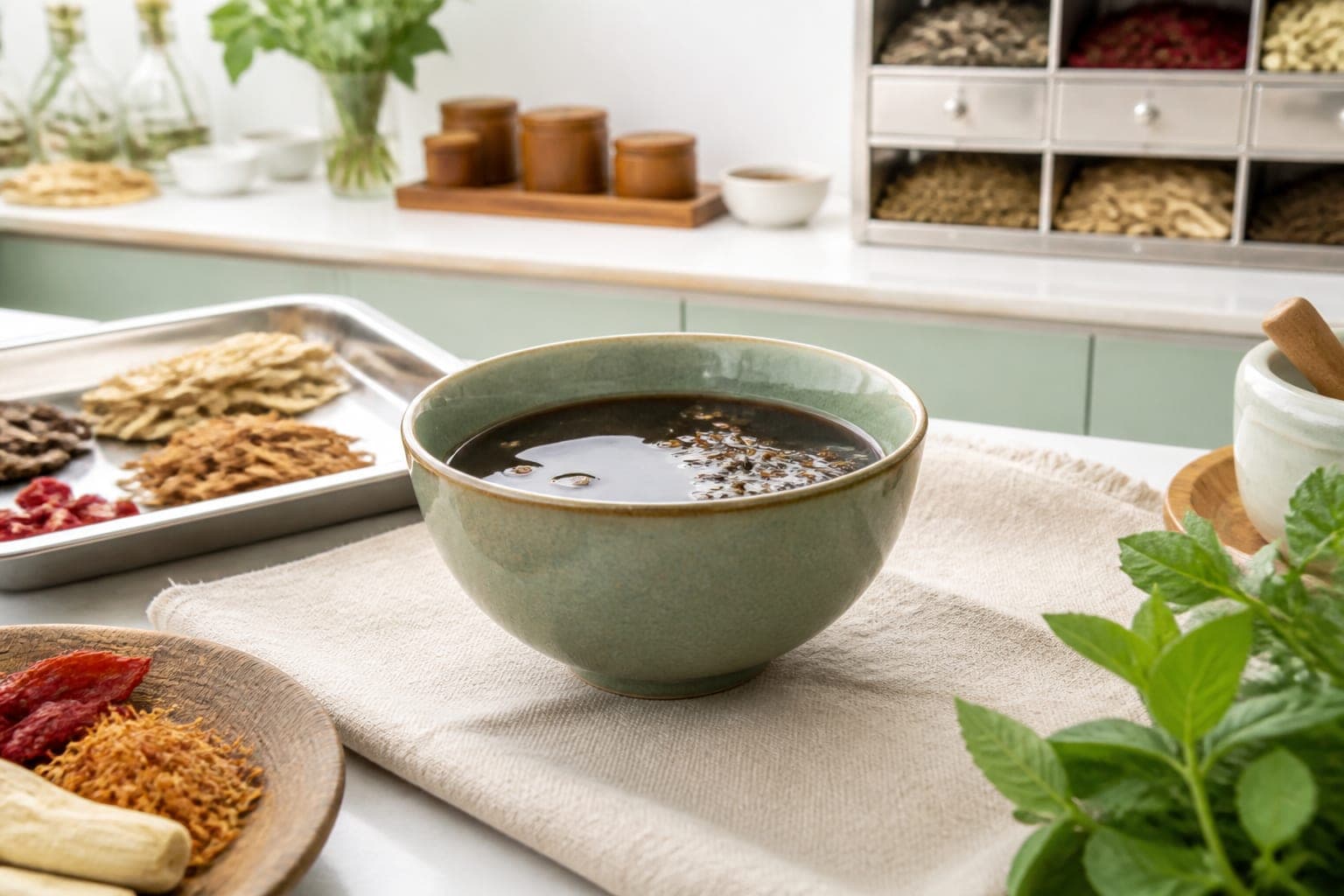
The enema decoction is led by dandelion with salvia, sparganium, coptis, phellodendron, loquat leaf, white mustard seed and corydalis. The actions below are how traditional Chinese medicine texts classify each herb; they have not been validated individually in CP/CPPS populations:
- Dandelion: traditionally used to clear heat and reduce swelling
- Salvia and sparganium: traditionally classed as blood-circulation herbs
- Coptis and phellodendron: traditionally classed as heat-clearing, damp-drying herbs
- Loquat leaf, white mustard seed and corydalis: traditionally used to resolve nodules and relieve pain
- Formula, dose, temperature and retention time follow clinic protocol and individual assessment
About the “duct blockage” hypothesis
The team uses “poor duct drainage with retained inflammatory secretions” as a working hypothesis to explain why some patients respond little to oral drugs alone. CP/CPPS is widely regarded as multifactorial — pelvic floor function, nerve sensitization and psychosocial factors all contribute — and this hypothesis has not been tested in controlled studies. We do not present it as an established cause.
Course and the published study
The published protocol was once daily for 7 consecutive days; the clinic currently schedules 7–10 days, confirmed after in-person assessment. The study, in Translational Andrology and Urology (2024), was a single-center retrospective pre–post comparison of 20 men with refractory CP/CPPS. At 6-month follow-up, VAS, IPSS and NIH-CPSI quality-of-life scores were lower than at baseline, and 17 of 20 completers self-rated at least 60% relief of their main symptoms. With no control group and a small sample, this is preliminary evidence and cannot predict individual outcomes. Source: https://doi.org/10.21037/tau-23-386
Eligibility boundaries and who should not proceed
The study enrolled men aged 18–60 with long-standing symptoms unresponsive to several routine treatments. The situations below fall outside what current evidence supports, or need other care first:
- Men over 60, or with significant BPH or prostate cancer, were excluded from the study; results cannot be applied directly
- Fever, chills, blood in urine, acute voiding difficulty or retention are emergencies — seek local urgent or urological care first
- Uncontrolled hypertension or diabetes, significant anorectal disease, bleeding risk, or inability to retain an enema require medical assessment
- If basic differential diagnosis (urinary infection, stones, bladder disorders) has not been completed, finish that workup first
Procedure and informed consent
THREM involves rectal administration and hands-on work in the perineal area. Sensations vary and local discomfort can occur. At the in-person visit the clinic explains each step, possible adverse effects, contraindications, how to stop at any time and how privacy is protected, and written informed consent is obtained before treatment begins. This website does not promise a “painless”, “comfortable” or “side-effect-free” experience.