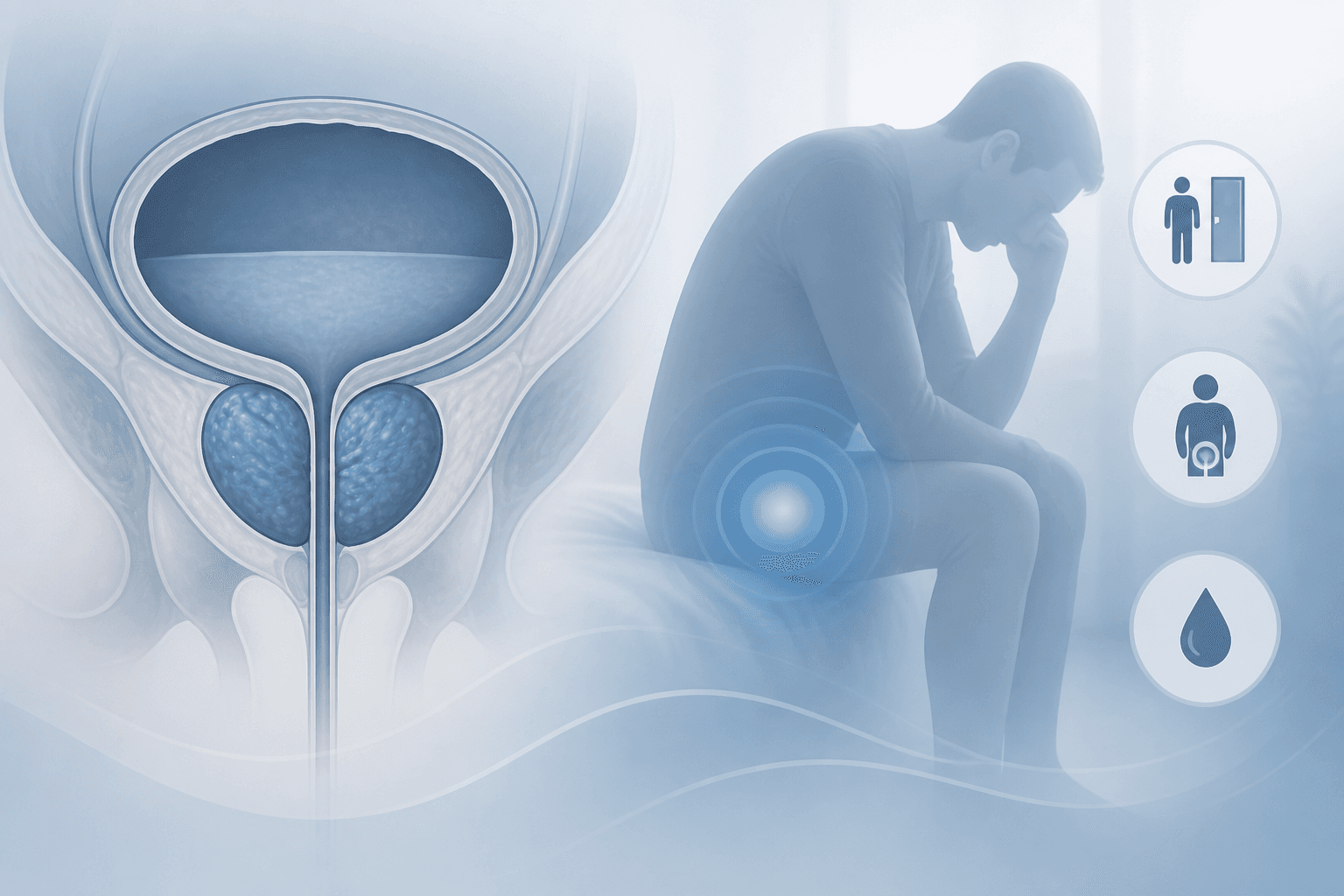
In CP/CPPS, pelvic or perineal pain is often the most distressing complaint. Close behind, for many patients, is urinary frequency — especially nocturia that fragments sleep. The two can coexist yet improve on different timelines, which is why some people say “pain is a bit better, but nights are still ruined.”
Pelvic pain: why it can linger
- Pelvic floor muscle tension or sensitization can amplify minor signals into persistent pain.
- Inflammatory mediators may alter nerve signaling, feeding a pain–tension–more pain loop.
- Prolonged sitting, anxiety, constipation, or prior infections can keep symptoms fluctuating.
Frequency and nocturia: not always “too much urine”
Nighttime trips sometimes relate to congestion around the prostate or a stronger sense of residual urine. In other cases the bladder neck or urethra becomes hypersensitive — a small volume triggers an urgent signal.
Anxiety and lighter sleep also heighten awareness of bladder cues, creating a nocturia–insomnia–hypervigilance cycle.
Conditions that should be ruled out
- Benign prostatic hyperplasia (BPH) or bladder outlet obstruction — especially when nocturia worsens in older men.
- Overactive bladder, urinary infection, stones, or interstitial cystitis and other bladder disorders.
- Diabetes, heart failure, diuretics, caffeine, or alcohol driving nocturnal urine production.
- Sleep apnea and other sleep disorders that increase awakenings and bathroom visits.
When to seek urgent care
- Fever, chills, blood in urine, or acute voiding difficulty.
- Inability to urinate at all (retention) — an emergency.
- Rapid worsening of pain or voiding symptoms, or unexplained weight loss.
- Nocturia severely affecting daytime function, or systemic symptoms such as chest tightness or leg swelling.
A 1–2 week symptom diary (nighttime voids, perceived volume, pain scores, alcohol and sleep) often helps clinicians prioritize the workup. Care should follow category and differential diagnosis — not the label “prostatitis” alone.