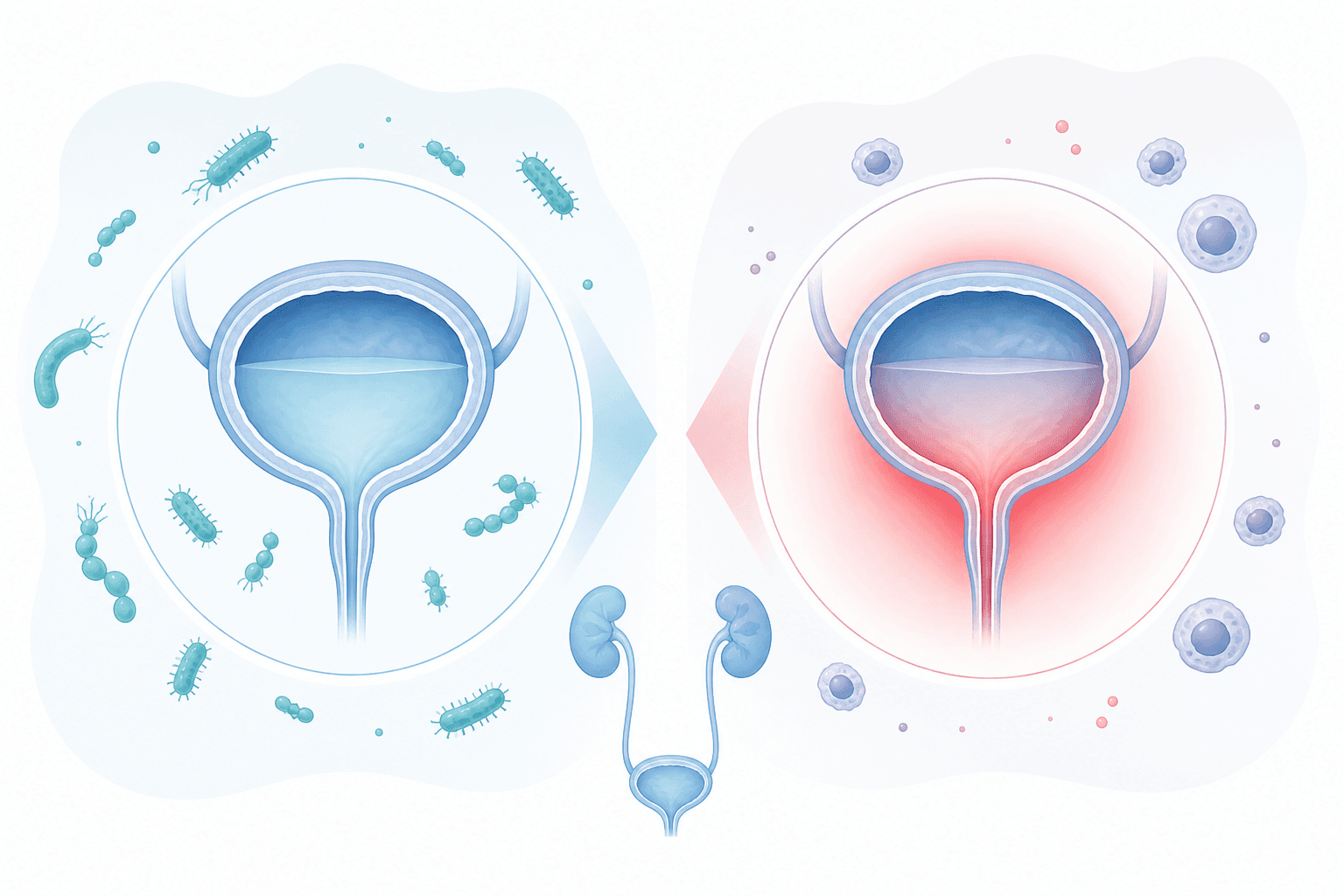
When people hear “inflammation,” many immediately think “bacteria — I need antibiotics.” In prostatitis, this mix-up is common and can lead to repeated antibiotic courses without meaningful improvement.
Medically, inflammation is the body’s defensive response to injury. Classic features include redness, swelling, heat, pain, and loss of function. Inflammation is a process, not a single diagnosis with one cause.
How infection relates to inflammation
Infection means pathogens such as bacteria, viruses, or fungi invade tissue and multiply, causing damage and immune activation. Infection is a major cause of inflammation, but not the only one.
Trauma, chemical irritation (including some reflux-related triggers), autoimmunity, and allergy can produce similar inflammatory signs. So: infection usually brings inflammation, but inflammation does not always mean bacterial infection.
The NIH four-category framework
- Type I: acute bacterial prostatitis — often with fever and systemic illness; treat as an urgent medical situation.
- Type II: chronic bacterial prostatitis — recurrent pathogenic bacteria may justify targeted antibiotics.
- Type III: chronic prostatitis/chronic pelvic pain syndrome (CP/CPPS) — pain or discomfort for ≥3 months, often without persistent infection evidence; among the most common presentations in clinic.
- Type IV: asymptomatic inflammatory prostatitis — inflammatory markers found incidentally; prostate-directed treatment may not be needed.
What this means in practice
- Fever, chills, severe voiding difficulty, or acute urinary retention warrant urgent urology or emergency care — not open-ended self-directed antibiotics.
- For Type III CP/CPPS, care often focuses on pain relief, urinary symptom management, pelvic floor rehabilitation, and lifestyle factors rather than endless antibiotic trials.
- Antibiotics should follow culture, microscopy, clinical pattern, and clinician judgment — not the phrase “prostate inflammation” alone.
Separating infection from inflammation helps you discuss a clearer workup with your clinician and can break the cycle of “more pills, same symptoms, rising anxiety.” Persistent symptoms deserve a structured review of prior tests and treatments.